我出差多,到过的城市也多。
Wǒ chūchāi duō, dào guò de chéngshì yě duō.
I travel a lot for work, so I have been to many cities.
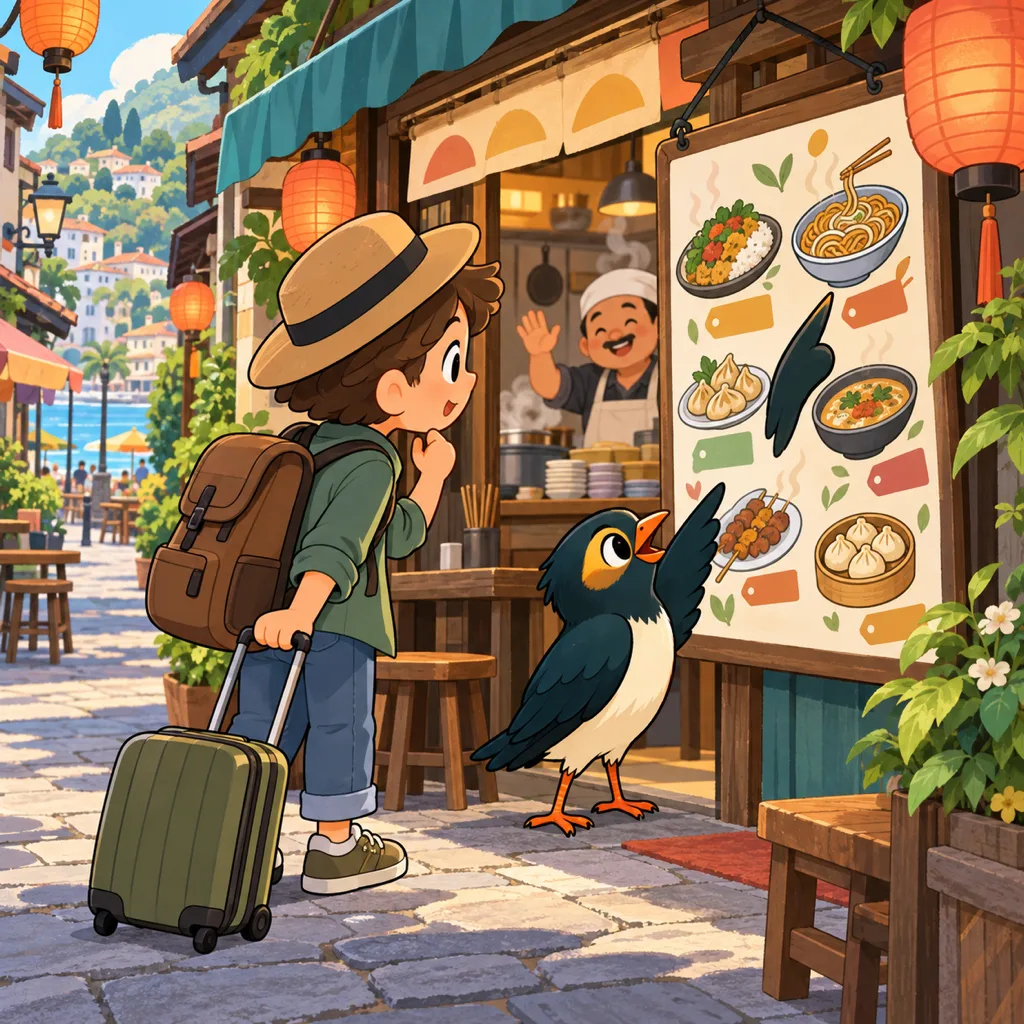
The Language of Menus
75 sentences you can read in full today.
Read it free. Hear it with Pro.
Every story beyond Band 4 is free to read. Line by line audio, listen first mode and the quiz are part of Pro, together with the full test bank and your words as files you keep.
我出差多,到过的城市也多。
Wǒ chūchāi duō, dào guò de chéngshì yě duō.
I travel a lot for work, so I have been to many cities.
每到一个新地方,我先找小饭馆。
Měi dào yí gè xīn dìfang, wǒ xiān zhǎo xiǎo fànguǎn.
Whenever I arrive somewhere new, I first look for small eateries.
不是大饭店,是门口挂着菜单的小店。
Bú shì dà fàndiàn, shì ménkǒu guà zhe càidān de xiǎo diàn.
Not big restaurants, but little places with a menu hung at the door.
我一直觉得,菜单是一个地方的方言。
Wǒ yìzhí juéde, càidān shì yí gè dìfang de fāngyán.
I have always felt that a menu is a place's dialect.
你读懂了菜单,就读懂了半座城。
Nǐ dú dǒng le càidān, jiùdú dǒng le bàn zuò chéng.
Once you can read the menu, you can read half the city.
哪道菜写在头上,哪道菜字最大,里面都有学问。
Nǎ dào cài xiě zài tóu shàng, nǎ dào cài zì zuì dà, lǐmiàn dōu yǒu xuéwen.
Which dish is written at the top, which in the biggest characters: there is learning in all of it.
有的菜单写在红纸上,贴在墙上。
Yǒude càidān xiě zài hóng zhǐ shàng, tiē zài qiáng shàng.
Some menus are written on red paper and pasted on the wall.
有的菜单只有一页,四角都卷了。
Yǒude càidān zhǐyǒu yí yè, sì jiǎo dōu juǎn le.
Some menus are a single page with curled corners.
纸越旧,说明店开得越久,越值得坐下来。
Zhǐ yuè jiù, shuōmíng diàn kāi de yuè jiǔ, yuè zhídé zuò xiàlái.
The older the paper, the longer the shop has been open, and the more it deserves a sit-down.
还有的店根本没有菜单。
Hái yǒude diàn gēnběn méiyǒu càidān.
And some shops have no menu at all.
没有菜单的店,老板就是菜单。
Méiyǒu càidān de diàn, lǎobǎn jiùshì càidān.
In a shop with no menu, the owner is the menu.
他会问你,几个人,吃不吃辣。
Tā huì wèn nǐ, jǐ gèrén, chī bù chī là.
He will ask how many of you there are and whether you eat spicy food.
我问他有什么菜。
Wǒ wèn tā yǒu shénme cài.
I ask what dishes he has.
他指指身后的大锅。
Tā zhǐ zhǐ shēn hòu de dà guō.
He points at the big pot behind him.
然后报出一串菜名,像在背书。
Ránhòu bào chū yí chuàn cài míng, xiàng zài bēi shū.
Then he rattles off a string of dish names, like reciting a lesson.
你点头,他就进了厨房。
Nǐ diǎntóu, tā jiù jìn le chúfáng.
You nod, and off he goes into the kitchen.
这样的店,往往最好吃。
Zhèyàng de diàn, wǎngwǎng zuìhǎo chī.
Shops like this are often the tastiest.
因为他的菜就那几样,样样做了几十年。
Yīnwèi tā de cài jiù nà jǐ yàng, yàng yàng zuò le jǐ shí nián.
Because he has only those few dishes, and each has been cooked for decades.
我在南方学到,点菜不要说随便。
Wǒ zài nánfāng xué dào, diǎn cài búyào shuō suíbiàn.
In the south I learned never to say 'anything is fine' when ordering.
你说随便,老板就当真。
Nǐ shuō suíbiàn, lǎobǎn jiù dàngzhēn.
If you say anything is fine, the owner takes you at your word.
我在北方学到,盘子比南方大一圈。
Wǒ zài běifāng xué dào, pánzi bǐ nánfāng dà yì quān.
In the north I learned that the plates are a size bigger than in the south.
两个人点三个菜,一定吃不完。
Liǎng gèrén diǎn sān gè cài, yídìng chī bù wán.
Two people ordering three dishes will never finish them.
老板娘会说,够了够了,吃完再点。
Lǎobǎn niáng huì shuō, gòu le gòu le, chī wán zài diǎn.
The owner will say, enough, enough, order more after you finish.
这一句比任何广告都让人安心。
Zhè yí jù bǐ rènhé guǎnggào dōu ràng rén ānxīn.
That one line is more reassuring than any advertisement.
菜单上的字也分脾气。
Càidān shàng de zì yě fēn píqi.
The writing on a menu has a temper of its own too.
字写得大的店,菜也做得大方。
Zì xiě de dà de diàn, cài yě zuò de dàfang.
A shop with big characters cooks with a generous hand.
字小又密的店,往往很仔细。
Zì xiǎo yòu mì de diàn, wǎngwǎng hěn zǐxì.
A shop with small, dense writing is usually very careful.
还有用粉笔写黑板的,一天一换。
Hái yǒuyòng fěn bǐ xiě hēibǎn de, yì tiān yí huàn.
Some write in chalk on a blackboard and change it every day.
今天有什么,就写什么。
Jīntiān yǒu shénme, jiù xiě shénme.
Whatever they have today is what they write.
卖完了,就当场擦掉。
Mài wán le, jiù dāngchǎng cā diào.
When something sells out, they wipe it off on the spot.
去晚了的客人,只能明天再来。
Qù wǎn le de kèrén, zhǐ néng míngtiān zài lái.
Guests who arrive late can only come back tomorrow.
我最喜欢的,是手写的菜单。
Wǒ zuì xǐhuan de, shì shǒu xiě de càidān.
My favorite is the handwritten menu.
字不一定好看,但是认真。
Zì bù yídìng hǎokàn, dànshì rènzhēn.
The handwriting may not be pretty, but it is earnest.
有一家店,菜单是老板的儿子写的。
Yǒu yì jiā diàn, càidān shì lǎobǎn de érzi xiě de.
In one shop, the menu was written by the owner's son.
他的字一笔一画,像小学生的作业。
Tā de zì yì bǐ yí huà, xiàng xiǎoxuéshēng de zuòyè.
His strokes were one by one, like a schoolboy's homework.
有一次在一家小店,菜单上有一个字写错了。
Yǒu yí cì zài yì jiā xiǎo diàn, càidān shàng yǒu yí gè zì xiě cuò le.
Once, in a little shop, one character on the menu was written wrong.
我说,我就要这个写错的菜。
Wǒ shuō, wǒ jiù yào zhège xiě cuò de cài.
I said, I will have the dish with the wrong character.
老板笑了,说这个菜也最好吃。
Lǎobǎn xiào le, shuō zhège cài yě zuìhǎo chī.
The owner laughed and said that dish was the tastiest too.
那道写错名字的菜,成了我每次必点的菜。
Nà dào xiě cuò míngzi de cài, chéng le wǒ měi cì bì diǎn de cài.
That wrongly named dish became the one I ordered every time.
那顿饭,我记到今天。
Nà dùn fàn, wǒ jì dào jīntiān.
I remember that meal to this day.
有时味道记不住,写字的人记得住。
Yǒushí wèidào jì bú zhù, xiě zì de rén jìde zhù.
Sometimes the taste is forgotten, but the person who wrote it is remembered.
菜单还会替人记住日子。
Càidān hái huì tì rén jì zhù rìzi.
A menu can also remember days for people.
我家楼下的小店,菜单十年没有换。
Wǒ jiā lóu xià de xiǎo diàn, càidān shí nián méiyǒu huàn.
The little eatery downstairs from my home has not changed its menu in ten years.
价格改了几次,旧数字上贴着白纸。
Jiàgé gǎi le jǐ cì, jiù shùzì shàng tiē zhe bái zhǐ.
The prices changed a few times, with white paper pasted over the old numbers.
白纸一层压着一层。
Bái zhǐ yì céng yā zhe yì céng.
One layer of white paper presses upon another.
每一层下面,都是一年的日子。
Měi yì céng xiàmiàn, dōu shì yì nián de rìzi.
Beneath every layer lies a year of days.
我和妻子头一次见面,就在那张桌子。
Wǒ hé qīzi tóu yí cì jiànmiàn, jiù zài nà zhāng zhuōzi.
My wife and I met for the first time at that very table.
那天我们点了菜单头上的两个菜。
Nà tiān wǒmen diǎn le càidān tóu shàng de liǎng gè cài.
That day we ordered the two dishes at the top of the menu.
后来每年那天,我们都去点那两个菜。
Hòulái měi nián nà tiān, wǒmen dōu qù diǎn nà liǎng gè cài.
Every year since, on that day, we go and order those two dishes.
老板不用问,看见我们就进厨房。
Lǎobǎn búyòng wèn, kànjiàn wǒmen jiù jìn chúfáng.
The owner does not need to ask; he sees us and heads for the kitchen.
前年,小店要关门的消息传了出来。
Qiánnián, xiǎo diàn yào guān mén de xiāoxi chuán le chūlái.
The year before last, word got out that the eatery was going to close.
整条街的人都来吃了一顿。
Zhěng tiáo jiē de rén dōu lái chī le yí dùn.
People from the whole street came for a meal.
老板把那张旧菜单从墙上取下来。
Lǎobǎn bǎ nà zhāng jiù càidān cóng qiáng shàng qǔ xiàlái.
The owner took the old menu down from the wall.
他说谁想要,可以拿走。
Tā shuō shéi xiǎng yào, kěyǐ ná zǒu.
He said whoever wanted it could take it.
没有人伸手。
Méiyǒu rén shēnshǒu.
Nobody reached out a hand.
大家让它留在墙上,留在老地方。
Dàjiā ràng tā liú zài qiáng shàng, liú zài lǎo dìfang.
Everyone let it stay on the wall, in its old place.
那一刻我明白,菜单也是墙的一部分。
Nà yí kè wǒ míngbai, càidān yě shì qiáng de yí bùfen.
At that moment I understood that a menu is part of the wall.
后来店没有关,儿子接了手。
Hòulái diàn méiyǒu guān, érzi jiē le shǒu.
In the end the shop did not close; the son took it over.
儿子印了新菜单,漂亮多了。
Érzi yìn le xīn càidān, piàoliang duō le.
The son printed a new menu, much prettier.
菜名后面还有外国字。
Cài míng hòumiàn hái yǒu wàiguó zì.
There are even foreign words after the dish names.
可是老客人来了,还是点那几样。
Kěshì lǎo kèrén lái le, háishi diǎn nà jǐ yàng.
But when the old customers come, they still order the same few dishes.
菜单新了,味道还是老味道。
Càidān xīn le, wèidào háishi lǎo wèidào.
The menu is new, but the taste is still the old taste.
老客人尝一口就知道,锅还是那口锅。
Lǎo kèrén cháng yì kǒu jiù zhīdào, guō háishi nà kǒu guō.
An old customer knows with one taste: the pot is still the same pot.
我现在出门吃饭,还是先看菜单。
Wǒ xiànzài chūmén chī fàn, háishi xiān kàn càidān.
Even now, when I eat out, I still read the menu first.
看字,看纸,看改了几次的价格。
Kàn zì, kàn zhǐ, kàn gǎi le jǐ cì de jiàgé.
I look at the writing, the paper, the prices that changed over the years.
一张菜单看下来,这家店的日子就看出来了。
Yì zhāng càidān kàn xiàlái, zhè jiā diàn de rìzi jiù kàn chūlái le.
Read through one menu, and you can see the life the shop has lived.
妻子说我点菜慢。
Qīzi shuō wǒ diǎn cài màn.
My wife says I order too slowly.
我说我不是在点菜。
Wǒ shuō wǒ bú shì zài diǎn cài.
I tell her I am not ordering.
我是在读这家店写给自己的信。
Wǒ shì zài dú zhè jiā diàn xiě gěi zìjǐ de xìn.
I am reading the letter this shop wrote to itself.
信里写的都是小事,今天进了什么鱼,明天什么菜下了市。
Xìn lǐ xiě de dōu shì xiǎo shì, jīntiān jìn le shénme yú, míngtiān shénme cài xià le shì.
The letter is full of small matters: what fish came in today, what vegetable goes out of season tomorrow.
她笑着摇头。
Tā xiào zhe yáo tóu.
She smiles and shakes her head.
上星期,儿子把新菜单拍了照片给我看。
Shàng xīngqī, érzi bǎ xīn càidān pāi le zhàopiàn gěi wǒ kàn.
Last week the son took a photo of the new menu and showed me.
照片里,菜单头上那两道菜没有变。
Zhàopiàn lǐ, càidān tóu shàng nà liǎng dào cài méiyǒu biàn.
In the photo, the two dishes at the top had not changed.
还是我们当年点的那两个菜。
Háishi wǒmen dāngnián diǎn de nà liǎng gè cài.
They are still the two dishes we ordered back then.
纸换了,字换了,那两个菜还在。
Zhǐ huàn le, zì huàn le, nà liǎng gè cài hái zài.
The paper changed, the writing changed, but those two dishes are still there.
What does the writer look for first when he arrives in a new place?
What is the menu in a shop that has no menu?
What was special about the dish the writer ordered in one small shop?
Why do the writer and his wife order the same two dishes every year?
What happened when word got out that the eatery would close?
What does the writer say he is doing when he reads a menu slowly?
Up next
OpenTake these words with you
Pro turns every band's words into Anki decks, spreadsheets and offline audio, and opens the audio on every story beyond Band 4.
 HearMandarinTodayLearnPracticeReviewMePro