我家附近的街角,有一个报摊。
Wǒ jiā fùjìn de jiē jiǎo, yǒu yí gè bào tān.
At the corner near my home, there was a newspaper stand.
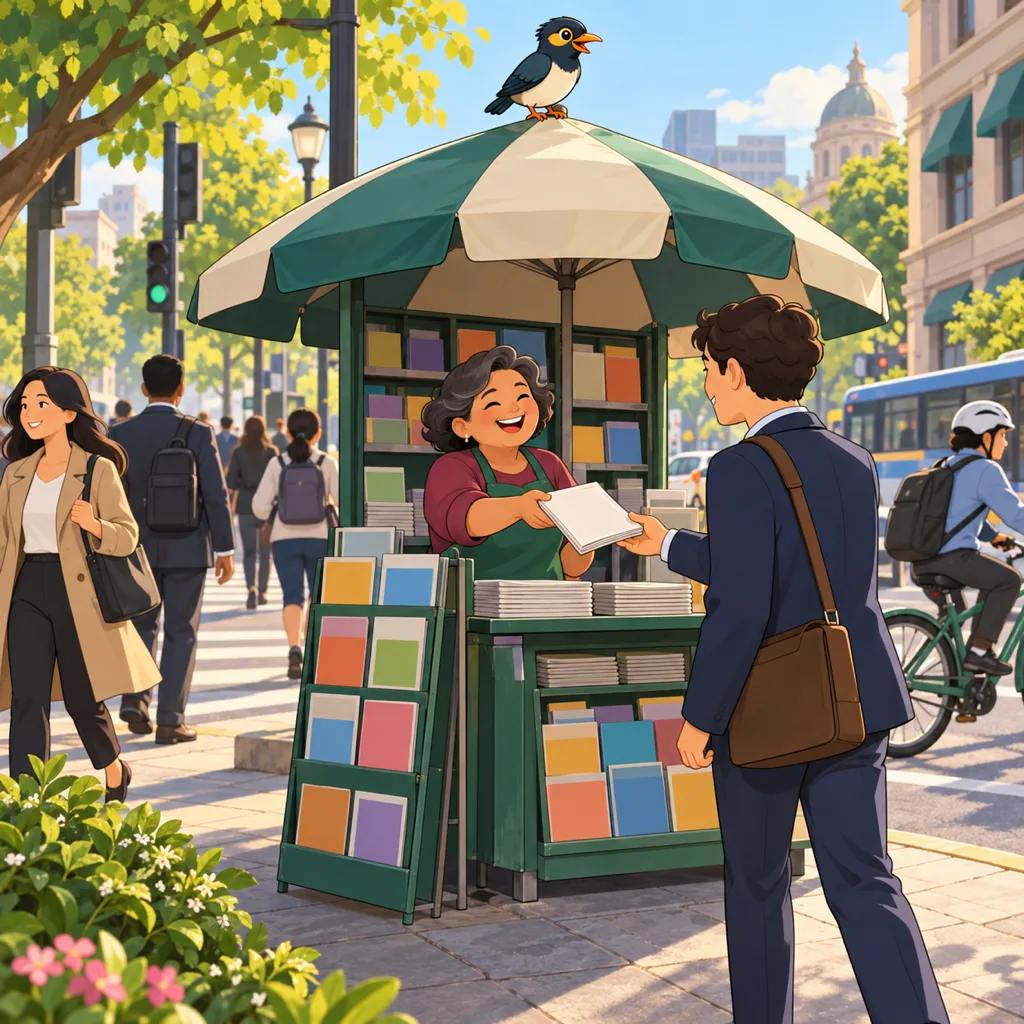
The Corner Newsstand
74 sentences you can read in full today.
Read it free. Hear it with Pro.
Every story beyond Band 4 is free to read. Line by line audio, listen first mode and the quiz are part of Pro, together with the full test bank and your words as files you keep.
我家附近的街角,有一个报摊。
Wǒ jiā fùjìn de jiē jiǎo, yǒu yí gè bào tān.
At the corner near my home, there was a newspaper stand.
报摊的主人是个五十多岁的女人,爱笑。
Bào tān de zhǔrén shì gè wǔ shí duō suì de nǚrén, ài xiào.
The keeper of the stand was a woman in her fifties who loved to laugh.
她的摊子很小,全部的生意只有一把大伞。
Tā de tān zi hěn xiǎo, quánbù de shēngyi zhǐyǒu yì bǎ dà sǎn.
Her stand was small; the whole business was one big umbrella.
伞下面摆着几层架子,擦得干干净净。
Sǎn xiàmiàn bǎi zhe jǐ céng jiàzi, cā de gàn gānjìng jìng.
Under the umbrella stood a few shelves, wiped perfectly clean.
架子上是报纸和杂志。
Jiàzi shàng shì bàozhǐ hé zázhì.
On the shelves were newspapers and magazines.
新到的杂志放在最外面,报纸放在手边。
Xīn dào de zázhì fàng zài zuì wàimiàn, bàozhǐ fàng zài shǒu biān.
Newly arrived magazines went on the outermost shelf, newspapers within reach.
我小时候,报摊前总是人挤人。
Wǒ xiǎoshíhou, bào tān qián zǒngshì rén jǐ rén.
When I was a child, the stand was always packed with people.
买晚报的,买杂志的,买地图的。
Mǎi wǎn bào de, mǎi zázhì de, mǎi dìtú de.
Some bought the evening paper, some magazines, some maps.
还有人来问她事情。
Hái yǒu rén lái wèn tā shìqing.
And some came to ask her questions.
问路的,找人的,打听事情的,都有。
Wèn lù de, zhǎo rén de, dǎting shìqing de, dōu yǒu.
Some asked directions, some looked for people, some made inquiries of every kind.
谁家住在哪里,家里几口人,她差不多都知道。
Shéi jiā zhù zài nǎlǐ, jiā lǐ jǐ kǒu rén, tā chàbuduō dōu zhīdào.
She knew roughly where every family lived and how many mouths each had.
哪路公交车到车站,她也知道。
Nǎ lù gōngjiāochē dào chēzhàn, tā yě zhīdào.
She also knew which bus went to the station.
人们说,她是这条街的地图。
Rén men shuō, tā shì zhè tiáo jiē de dìtú.
People said she was the map of this street.
她听了就笑,笑完接着卖她的报纸。
Tā tīng le jiù xiào, xiào wán jiēzhe mài tā de bàozhǐ.
Hearing this she laughed, then went back to selling her newspapers.
父亲每天下班,都要在报摊前站一会儿。
Fùqīn měi tiānxià bān, dōu yào zài bào tān qián zhàn yíhuìr.
Every day after work, my father would stop at the stand for a while.
买一份晚报,和她说说话。
Mǎi yí fèn wǎn bào, hé tā shuō shuōhuà.
He bought an evening paper and chatted with her.
报纸上的事,他们能说上半天。
Bàozhǐ shàng de shì, tāmen néng shuō shàng bàntiān.
They could talk for ages about what was in the paper.
有时为一件事,两个人说得脸红。
Yǒushí wèi yí jiàn shì, liǎng gèrén shuō de liǎn hóng.
Sometimes they argued about something until their faces turned red.
父亲回家还要接着想,第二天接着去说。
Fùqīn huí jiā hái yào jiēzhe xiǎng, dì èr tiān jiēzhe qù shuō.
My father kept thinking about it at home and resumed the argument the next day.
第二天,父亲还是照样去。
Dì èr tiān, fùqīn háishi zhàoyàng qù.
The next day, my father went just the same.
我上大学以后,父亲的报纸还在买。
Wǒ shàng dàxué yǐhòu, fùqīn de bàozhǐ hái zài mǎi.
After I left for university, my father kept buying his paper.
父亲说,她还问起你。
Fùqīn shuō, tā hái wèn qǐ nǐ.
He told me she still asked about me.
她问,你家孩子什么时候回来。
Tā wèn, nǐ jiā háizi shénme shíhou huílái.
She asked when his child would come home.
我每年回家的头一天,她隔着老远就能认出来。
Wǒ měi nián huí jiā de tóu yì tiān, tā gé zhe lǎo yuǎn jiù néng rèn chūlái.
On my first day home each year, she recognized me from far away.
她说,长高了,也瘦了。
Tā shuō, zhǎng gāo le, yě shòu le.
She said I had grown taller and thinner.
其实我已经三十多岁,自己也当了父亲。
Qíshí wǒ yǐjīng sān shí duō suì, zìjǐ yě dāng le fùqīn.
In fact I was already over thirty and a father myself.
在她眼里,我还是从前那个孩子。
Zài tā yǎn lǐ, wǒ háishi cóngqián nàge háizi.
In her eyes I was still the child from back then.
那个每天放学来看报纸的孩子。
Nàge měi tiān fàngxué lái kàn bàozhǐ de háizi.
The child who came every day after school to read the papers.
后来,看报纸的人越来越少。
Hòulái, kàn bàozhǐ de rén yuè lái yuè shǎo.
Later, fewer and fewer people read newspapers.
大家都在手机上看新闻。
Dàjiā dōu zài shǒujī shàng kàn xīnwén.
Everyone read the news on their phones.
架上的杂志一年比一年少。
Jià shàng de zázhì yì nián bǐ yì nián shǎo.
The magazines on the shelves grew fewer year by year.
以前一架子摆不下,后来半架子都摆不满。
Yǐqián yí jiàzi bǎi búxià, hòulái bàn jiàzi dōu bǎi bùmǎn.
Once the shelves could not hold them all; later even half a shelf could not be filled.
先是厚的杂志不见了。
Xiān shì hòu de zázhì bújiàn le.
First the thick magazines disappeared.
后来连晚报也停了。
Hòulái lián wǎn bào yě tíng le.
Then even the evening paper stopped.
最后那天的晚报,她多进了几十份,送给老熟人。
Zuìhòu nà tiān de wǎn bào, tā duō jìn le jǐ shí fèn, sòng gěi lǎo shúrén.
For that last day’s evening paper, she ordered dozens of extra copies to give to old friends.
报摊前的人,一天能数得过来。
Bào tān qián de rén, yì tiān néng shù de guòlái.
The people at the stand could be counted in a day.
她还是每天早上六点出摊,风雨不改。
Tā háishi měi tiān zǎoshang liù diǎn chū tān, fēngyǔ bù gǎi.
Still she set out her stand at six every morning, in wind and rain alike.
把不多的报纸摆得整整齐齐。
Bǎ bù duō de bàozhǐ bǎi de zhěngzhěng qí qí.
She arranged her few newspapers neatly.
有人来,她笑;没有人来,她也坐着。
Yǒu rén lái, tā xiào; méiyǒu rén lái, tā yě zuò zhe.
When people came, she smiled; when nobody came, she sat there all the same.
她说,摆了三十年的摊,放不下。
Tā shuō, bǎi le sān shí nián de tān, fàng búxià.
She said she could not let go of a stand she had kept for thirty years.
三十年,这条街的孩子都让她看大了。
Sān shí nián, zhè tiáo jiē de háizi dōu ràng tā kàn dà le.
Thirty years; the children of this street all grew up under her eyes.
前年冬天,街角要修路。
Qiánnián dōngtiān, jiē jiǎo yào xiū lù.
The winter before last, the corner was due for road work.
报摊不能在那里摆了。
Bào tān bù néng zài nàlǐ bǎi le.
The stand could no longer stay at that spot.
最后一天,许多老邻居都来了。
Zuìhòu yì tiān, xǔduō lǎo línjū dōu lái le.
On the last day, many old neighbors came.
有人买走了架上的报纸。
Yǒu rén mǎi zǒu le jià shàng de bàozhǐ.
Some bought the newspapers off the shelves.
有人买走了剩下的杂志。
Yǒu rén mǎi zǒu le shèng xià de zázhì.
Some bought the magazines that were left.
父亲把那天的晚报买了十份。
Fùqīn bǎ nà tiān de wǎn bào mǎi le shí fèn.
My father bought ten copies of that day's evening paper.
他说,留着,是个纪念。
Tā shuō, liú zhe, shì gè jìniàn.
He said, keep them, as a memento.
收摊的时候,她把架子认认真真擦了一遍。
Shōu tān de shíhou, tā bǎ jiàzi rèn rènzhēn zhēn cā le yí biàn.
When she closed up, she wiped the shelves with great care.
大伞收起来,靠在身边。
Dà sǎn shōu qǐlái, kào zài shēnbiān.
The big umbrella was folded and leaned at her side.
有人在旁边拍照,说留个纪念。
Yǒu rén zài pángbiān pāizhào, shuō liú gè jìniàn.
Someone nearby took photos, saying it was for a memento.
她站在空了的街角,看了很久很久。
Tā zhàn zài kōng le de jiē jiǎo, kàn le hěn jiǔ hěn jiǔ.
She stood at the empty corner and looked for a long, long time.
然后推着小车,慢慢走了。
Ránhòu tuī zhe xiǎo chē, màn màn zǒu le.
Then she pushed her little cart and walked slowly away.
她一次都没有回头。
Tā yí cì dōu méiyǒu huítóu.
She did not look back even once.
如今那个街角修得又宽又平,又亮。
Rújīn nàge jiē jiǎo xiū de yòu kuān yòu píng, yòu liàng.
Now that corner has been rebuilt wide, smooth, and bright.
走路的人多了,停下来的人少了。
Zǒulù de rén duō le, tíng xiàlái de rén shǎo le.
More people walk by, and fewer stop.
父亲还是每天那个时间出门,像上班一样。
Fùqīn háishi měi tiān nàge shíjiān chūmén, xiàng shàngbān yíyàng.
My father still goes out at that same time every day, as if going to work.
走到那个街角,站一会儿,再走回来。
Zǒu dào nàge jiē jiǎo, zhàn yíhuìr, zài zǒu huílái.
He walks to that corner, stands a while, and walks back.
他的手里,再也没有报纸了。
Tā de shǒu lǐ, zài yě méiyǒu bàozhǐ le.
There is no longer any newspaper in his hands.
他说,不买点什么,手里空空的。
Tā shuō, bù mǎi diǎn shénme, shǒu lǐ kōng kōng de.
He says that without buying something, his hands feel empty.
前几天,我去城市的另一头办事,看见了她。
Qián jǐ tiān, wǒ qù chéngshì de lìng yìtóu bànshì, kànjiàn le tā.
A few days ago I went to the other end of the city on business and saw her.
她在儿子家的楼下,看着孩子玩。
Tā zài érzi jiā de lóu xià, kàn zhe háizi wán.
She was downstairs at her son’s home, watching the child play.
隔着一条马路,她老远就认出了我。
Gé zhe yì tiáo mǎlù, tā lǎo yuǎn jiù rèn chū le wǒ.
Across a whole road, she recognized me from far away.
她拉着我的手说,你父亲还好吧。
Tā lā zhe wǒ de shǒu shuō, nǐ fùqīn hái hǎo ba.
She took my hand and asked whether my father was well.
我说好,就是还改不了每天出去转一圈的老习惯。
Wǒ shuō hǎo, jiùshì hái gǎi bù le měi tiān chūqù zhuǎn yì quān de lǎo xíguàn.
I said he was well, only he could not shake the old habit of going out for a turn every day.
她笑了,说习惯是好东西。
Tā xiào le, shuō xíguàn shì hǎo dōngxi.
She laughed and said habits are good things.
她的头发全白了,笑起来的样子没有变。
Tā de tóufa quán bái le, xiào qǐlái de yàngzi méiyǒu biàn.
Her hair had gone all white, but her way of laughing had not changed.
分手时,她递给我一样东西。
Fēnshǒu shí, tā dì gěi wǒ yíyàng dōngxi.
As we parted, she handed me something.
是一本刚印出来的新杂志。
Shì yì běn gāng yìn chūlái de xīn zázhì.
It was a magazine that had just come off the press.
她说,拿回去,给你父亲看看。
Tā shuō, ná huíqù, gěi nǐ fùqīn kàn kàn.
She said, take it home and show it to your father.
我把杂志带回家,父亲翻了好多遍。
Wǒ bǎ zázhì dài huí jiā, fùqīn fān le hǎoduō biàn.
I brought the magazine home, and my father leafed through it many times.
他一个字一个字地读,像在读一封信。
Tā yí gè zì yí gè zì de dú, xiàng zài dú yì fēng xìn.
He read it character by character, as if reading a letter.
翻完,父亲把它平平地放在桌子最中间的地方。
Fān wán, fùqīn bǎ tā píng píng de fàng zài zhuōzi zuì zhōngjiān de dìfang.
When he finished, my father laid it flat in the very middle of the table.
那里,从前放他每天买的晚报。
Nàlǐ, cóngqián fàng tā měi tiān mǎi de wǎn bào.
That was where the evening paper he bought every day used to lie.
What did people say the woman at the stand was?
What did the writer's father do at the stand every day after work?
Why did the stand become quiet over the years?
Why did the stand have to close?
How many copies of the last evening paper did the father buy?
What did the woman give the writer when they met again?
Up next
OpenTake these words with you
Pro turns every band's words into Anki decks, spreadsheets and offline audio, and opens the audio on every story beyond Band 4.
 HearMandarinTodayLearnPracticeReviewMePro